Ethical Elephant Sanctuaries on Koh Samui: What the Word Means
No Samui sanctuary we list offers riding. The real difference is contact: watching, feeding or bathing. Which visit meets the welfare standard, from $27.
Most elephant venues on Koh Samui now call themselves sanctuaries, and none of the ones we list offers riding. So “ethical” no longer separates them. What does is how close you get: watching from a distance, feeding them by hand, or getting into the water and the mud with them.
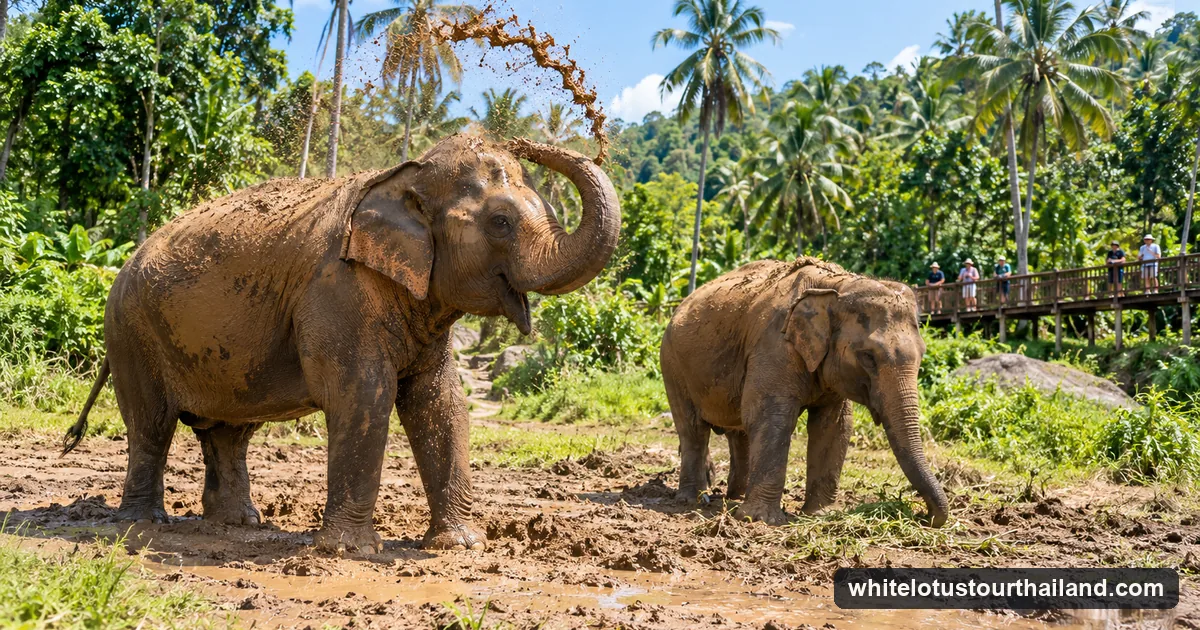
World Animal Protection, which assesses elephant venues across Thailand, draws its line at observation: no riding, no shows, and no washing or bathing with the elephants. By that measure the closest visit you can book here is Samui Elephant Kingdom’s half day. It describes itself as observation-only, has you feed the elephants from a 400-metre skywalk, and leaves bathing out of the programme.
Check the Elephant Kingdom half day
Why the word is slippery
Many of Thailand’s working elephants moved into tourism after the country banned logging in 1989: shows, rides, and later the camps that let visitors bathe with them. As riding fell out of favour, bathing became the popular replacement, and venues that offer it often call themselves sanctuaries too. World Animal Protection advises against it, along with any other direct, close contact.
Its 2025–26 list of observational venues names one place on Koh Samui, Samui Elephant Sanctuary, which sells its visits on its own website rather than through the booking platform we use. If an independent assessment is what you go by, that is the name to look up. Even there, the list notes, hand feeding over a barrier is offered, and World Animal Protection asks visitors to skip it. Everything below is what you can book here, sorted by how much contact it involves.
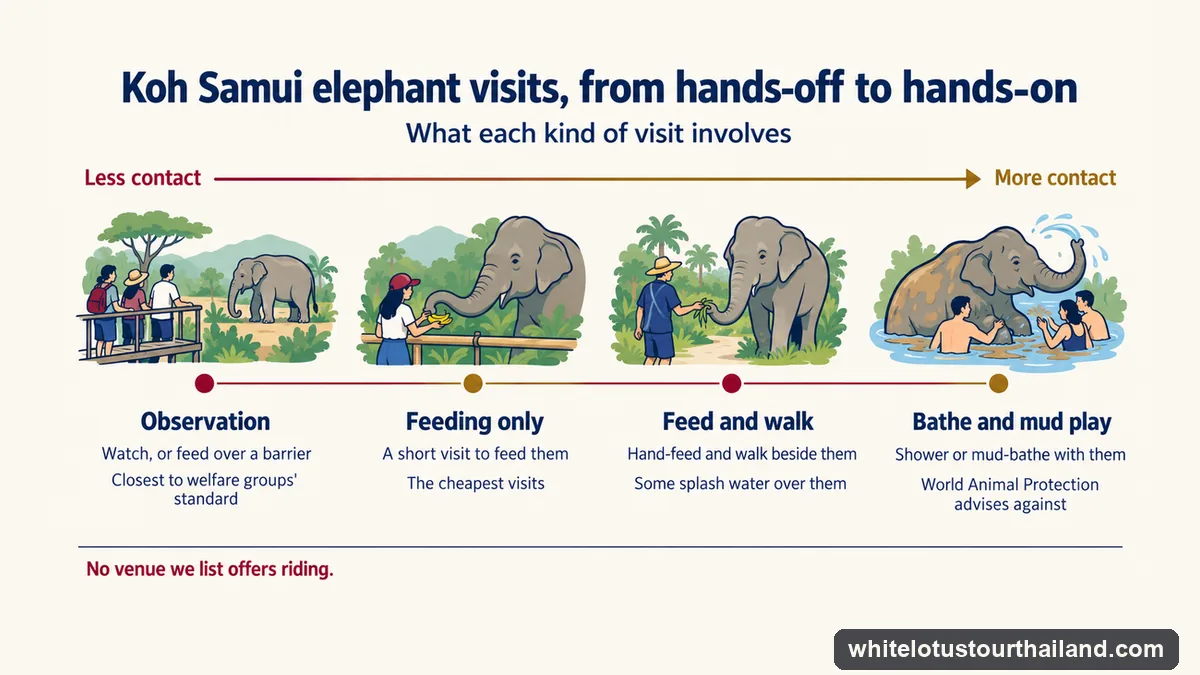
The four kinds of visit
Observation: Samui Elephant Kingdom
A half day with hotel pickup, morning or afternoon. A guide introduces the rescued elephants and their history, you help make the medicine balls that keep them healthy, then feed them from the skywalk, a raised walkway 400 metres long. That is feeding over a barrier, the same contact World Animal Protection notes at the venues on its list; you can watch instead. After that you walk with them to the mud pit and watch them play, have a buffet lunch, and say goodbye from the skywalk. Guides speak English, Thai and Chinese, and German on four days a week. From $89, rated 4.9 over 1,657 reviews. One September reviewer chose it “because of its ethics to elephant care and was not disappointed”.
Feeding only
The two cheapest visits are the simplest. Elephant Home runs a one-hour nursery visit built around education, with a short feeding, for $30 (4.9 over 1,684) with pickup included. The entry and feeding ticket at Elephant Jungle Sanctuary in Mae Nam is $27 with 1,997 reviews; it is an entry ticket, not a tour, so there is no transport, and you feed the elephants at feeding time.
Feed and walk: Samui Elephant Home
Closer contact. You help the mahouts prepare food, hand-feed the elephants under their guidance, then walk beside them into the jungle and watch them take a mud bath and cool off in a large pool. The listing also offers you the chance to help the mahouts splash water over them, which is the kind of washing World Animal Protection advises against. There is a seed-bomb planting activity in between and a vegetarian buffet after. Pickup is included. From $89, rated 4.9 over 1,844 reviews; two recent reviewers wrote that the elephants were “in full control” and “allowed to decide the interactions”.
Bathing and mud play
Two well-reviewed visits put you in the water with the elephants. Elephant Jungle Sanctuary’s “Feed & Shower” ($62, 1,181 reviews) has you help shower them, and Samui Elephant Spa’s half day ($80, 687 reviews) adds mud play and a bath. These are the hands-on kind World Animal Protection advises against. If that standard matters to you, choose Elephant Kingdom or one of the two short feeding visits.
Is riding elephants ethical in Thailand?
Not by the welfare standard above, and no venue on this page offers it. World Animal Protection counts riding among the experiences to avoid, and its highest-scoring venues in Thailand are all observation-only. One Samui tour company that stops at Elephant Home on a jungle day puts it plainly in its listing: it “does not support or include elephant riding in any tour”.
Which one to book
Elephant Kingdom half day
Observation-only by its own description; feeding from the skywalk, no bathing.
Check dates →Samui Elephant Home
Hand-feeding with the mahouts, a jungle walk beside the elephants, and a chance to splash water over them.
See Elephant Home →Elephant Home nursery visit
Education first, with a short feeding. The cheapest visit with transport.
See the nursery visit →Prices, ratings and review counts from our October 2026 data check; operators change prices by season, so treat them as a guide, not a quote.
Other questions people ask
Which is the most ethical elephant sanctuary in Koh Samui?
By World Animal Protection’s 2025–26 list, Samui Elephant Sanctuary, the only Samui venue on it; you book it on its own site. Of the visits you can book here, Samui Elephant Kingdom is the one built around observation, with feeding from a skywalk and no bathing.
Are any Thai elephant sanctuaries ethical?
Yes. World Animal Protection’s list of observational venues names places across the country, among them Boon Lott’s Elephant Sanctuary in Sukhothai, Phuket Elephant Sanctuary and Following Giants on Koh Lanta. What they share is that visitors watch and do not ride, wash or bathe the elephants.
Can you bathe with elephants on Koh Samui?
Yes, at two of the venues above, and Elephant Home lets you help splash water over them; welfare groups advise against all of it. The Elephant Kingdom visit lets you watch the elephants play in the mud on their own terms instead.
Elephant Home is also a stop on a jungle safari day that adds a waterfall and a viewpoint. If you are planning the rest of the week, how many days in Koh Samui lays out a plan, and Pig Island is the other animal outing people ask about.
Venue details from the operators’ listings, read October 2026. Welfare standard and the list of observational venues from World Animal Protection (2025–26); the logging ban from Thai elephant-history sources.
Book the Elephant Kingdom Half Day
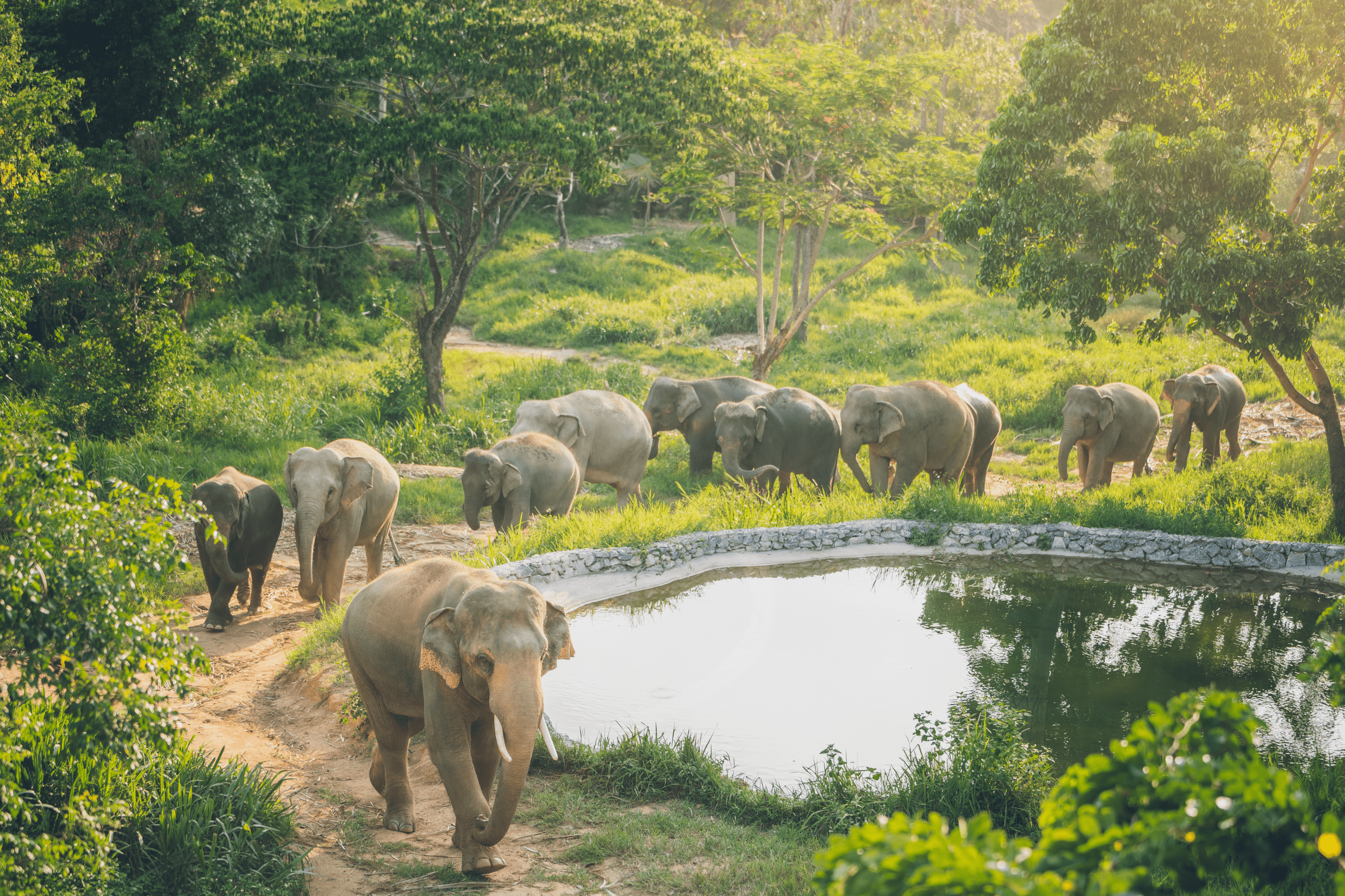
Samui Elephant Kingdom's half-day visit: an introduction to its rescued elephants, feeding from a 400 m skywalk, a walk with them to the mud pit and a buffet lunch. Hotel pickup, morning or afternoon. From $89, rated 4.9 by 1,657 guests, free cancellation up to 24 hours before. Bathing with the elephants is not part of it.
Check Dates & Book